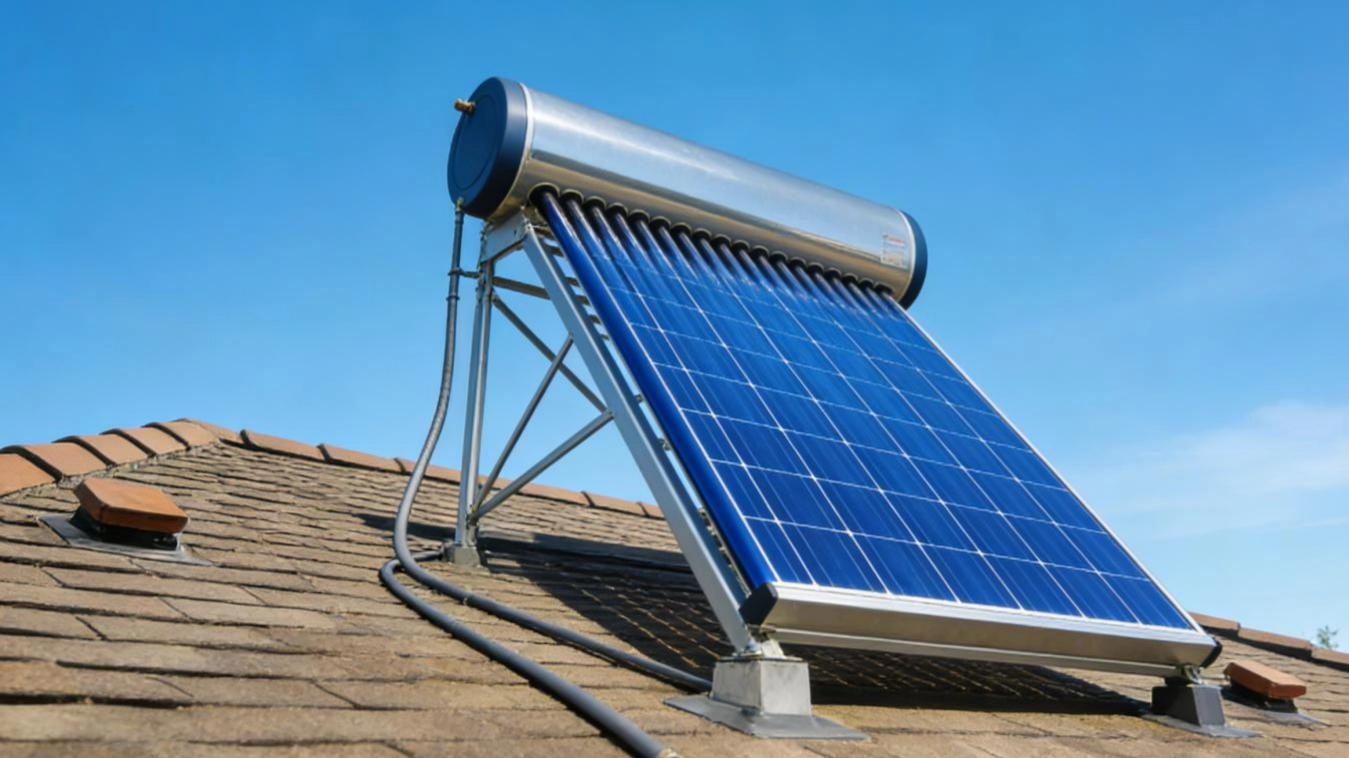
A Solar Water Tank is an essential component in a solar hot water system, designed to store and preserve thermal energy generated by solar collectors. Instead of relying entirely on electricity or gas, it allows households to utilize renewable solar energy for daily hot water needs. However, for many homeowners, the key question remains: is it truly worth the investment in real-world residential use?
To answer this properly, we need to look beyond installation cost and examine performance, long-term savings, usability, and system behavior under different conditions.
A Solar Water Tank does more than simply store hot water. It acts as a thermal energy buffer, ensuring that solar-generated heat is available when sunlight is not present.
In a typical solar hot water system, the process works as follows:
▶ Solar collectors absorb solar radiation
▶ Heat is transferred to water or a heat exchange fluid
▶ The Solar Water Tank stores the heated water
▶ Hot water is delivered for household use (bathroom, kitchen, laundry)
Because solar energy is intermittent, the tank plays a critical role in stabilizing temperature and ensuring continuous supply.
A simplified comparison helps illustrate its value:
| System Aspect | Traditional Electric Heater | Solar Water Tank System |
| Energy source | Grid electricity | Solar energy + backup |
| Operating cost | Continuous electricity use | Significantly reduced electricity use |
| Energy stability | Fully stable | Stable with storage design |
| Environmental impact | Higher emissions | Low-carbon operation |
From a homeowner’s perspective, the benefits of a Solar Water Tank become most noticeable in daily usage rather than theory.
Many users report that after installation, the system behaves differently from conventional heaters:
▶ Water temperature remains more stable throughout the day
▶ Energy bills gradually decrease over months of use
▶ The system operates quietly with minimal mechanical noise
▶ Hot water availability becomes less dependent on peak electricity pricing
However, expectations need to be realistic. Solar systems are influenced by weather conditions, which can lead to variation in performance.
Common observations include:
▶ Strong sunlight days → excellent hot water supply
▶ Cloudy or rainy periods → reduced solar contribution
▶ Night usage → depends on stored heat and tank insulation
This is why system design and insulation quality are crucial to performance.
Whether a Solar Water Tank is worth installing depends on several practical conditions:
▶ Sunlight availability in your region
▶ Daily household hot water consumption
▶ Tank insulation and heat retention performance
▶ System sizing and installation quality
▶ Availability of backup heating support
To simplify decision-making:
| Household Type | Suitability Level | Reason |
| Small household with low usage | Moderate | Longer payback period |
| Medium household (2–4 people) | High | Balanced usage and savings |
| Large household with high demand | Very high | Strong energy savings potential |
| Cloudy region without backup system | Moderate | Needs hybrid support |
In general, households with stable or higher hot water usage benefit the most from solar water heating systems.
Most systems include a backup heater (electric or heat pump). The Solar Water Tank continues supplying hot water, but energy is temporarily supported by auxiliary heating.
Yes, but the reduction depends on usage and climate. In sunny regions, households can offset a large portion of water heating costs over time.
No. Maintenance is relatively low and mainly involves checking valves, insulation condition, and system pressure. Compared to gas systems, it is simpler and safer.
Not if properly sized. The tank capacity is designed based on household demand, ensuring enough stored hot water for daily use.
One of the most important but often overlooked factors is heat retention efficiency. Even if solar input is strong, poor insulation will result in energy loss.
High-quality Solar Water Tanks typically use:
▶ Thick polyurethane insulation layers
▶ Corrosion-resistant stainless steel inner tanks
▶ Optimized internal heat exchange structures
These features significantly improve performance and reduce standby heat loss, especially overnight.
For homeowners considering a reliable and efficient system, selecting a well-designed product is essential. A high-performance Solar Water Tank system should balance:
▶ Strong thermal insulation
▶ Durable stainless steel construction
▶ Stable pressure handling
▶ Compatibility with solar collectors and backup heating systems
One example is the residential-grade solar water tank series available here:
https://www.hotwatertankfactory.com/solar-water-tank.html
These systems are designed specifically for household applications, focusing on long-term durability, stable heat storage, and efficient solar integration. With proper sizing and installation, they can significantly improve energy efficiency while maintaining consistent hot water availability.

A Solar Water Tank is generally worth the investment for homeowners who want to reduce long-term energy costs and improve sustainability. While it requires higher initial setup compared to conventional water heaters, its ability to utilize free solar energy, reduce electricity consumption, and provide stable hot water supply makes it a strong long-term solution.
When properly designed and paired with a suitable system, it becomes not just a storage unit, but a core component of an efficient and modern household energy strategy.



