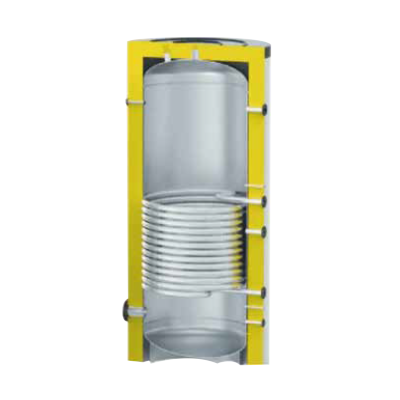
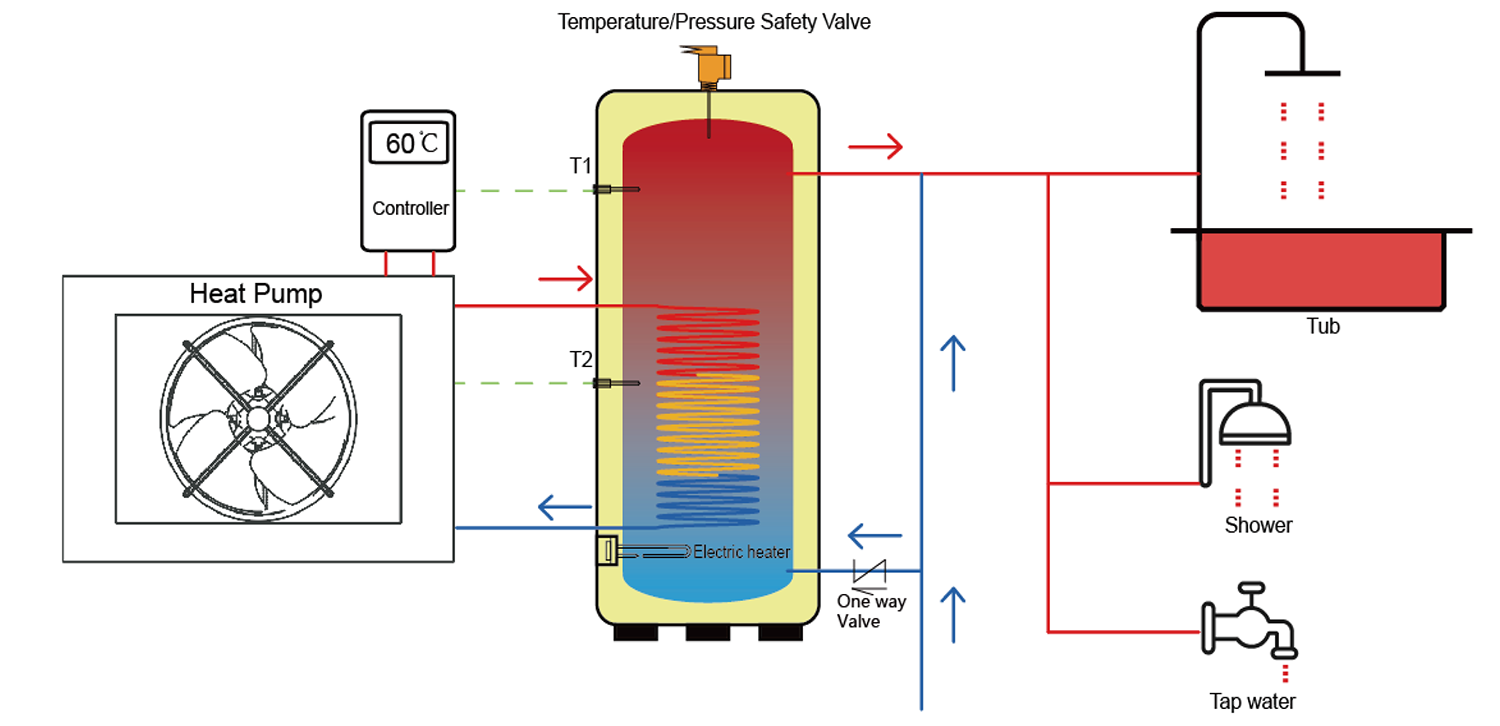
Heat Pump Electric Water Heaters are highly efficient solutions for supplying domestic hot water and can be used in conjunction with heat pump systems for floor heating applications. Unlike traditional water heaters, heat pumps use electricity to transfer existing heat from one location to another, rather than generating heat directly.
Heat pump technology is widely adopted by homeowners for both heating and cooling buildings, and it can also be configured as a standalone domestic hot water system or as part of an integrated solution that provides both hot water and space conditioning.

24 Hours Hot Water

Energy Saving

Green House

Customization

High-Pressure Water Supply
| Capacity (L) | 80 100 120 150 200 250 300 400 500 600 700 800 1000 |
| Inner tank material | SUS304 / SUS316L / Duplex Steel 2205 |
| Outer tank material | Galvanized steel with painting SUS201 / SUS304 / SUS316L |
| Insulation thickness (mm) | 50 standard, optional 45/55/60/80/100 |
| Connection size (inch) | 1/2″ 3/4″ 1″ 5/4″ 6/4″ 2″ |
| Electric heater | 1″- 6/4″ 1.5-3Kw 110-240V 50-60Hz |
| Heat exchange material | Stainless steel/TP2 copper |
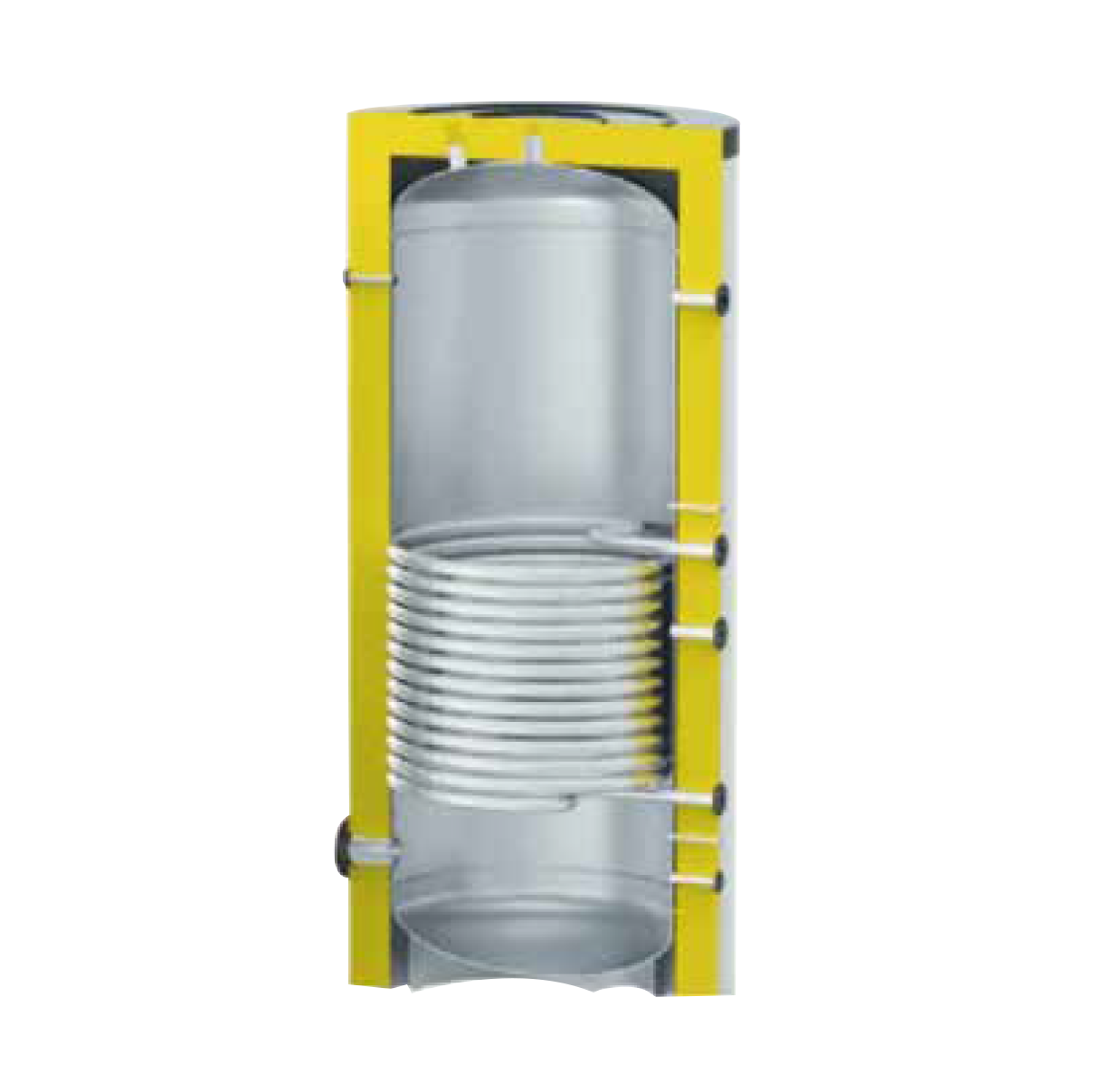
1. This is a stainless steel, pressurized, insulated water tank with an operating pressure of 6 bar and a test pressure of 10 bar for 10 minutes.
2. This tank can be connected to a variety of heat sources (heat pumps, solar collectors, electric heating, gas boilers, etc.)
High Energy Efficiency
Heat Pump Electric Water Heaters are designed to work with heat pump systems that transfer heat from ambient air to water rather than generating heat directly. This process delivers significantly higher energy efficiency compared to conventional electric water heaters, helping households reduce electricity consumption and long-term operating costs.
Optimized Thermal Storage Performance
The tank functions as a thermal storage unit, holding hot water at a stable temperature for on-demand use. High-density insulation minimizes standby heat loss, allowing stored hot water to remain available for extended periods while reducing the operating frequency of the heat pump.
Stable Temperature and System Operation
By storing sufficient hot water volume, the tank helps smooth demand fluctuations and prevents frequent on–off cycling of the heat pump. This improves system stability, enhances comfort, and extends the service life of key system components.
Flexible System Integration
Heat pump water tanks are typically equipped with multiple inlet and outlet connections, allowing easy integration with heat pumps, auxiliary electric heaters, or solar thermal systems. This flexibility supports hybrid energy solutions and future system upgrades.
Safe and Hygienic Water Storage
Manufactured from corrosion-resistant stainless steel materials, heat pump water tanks help maintain water quality and hygiene. Built-in safety features such as temperature and pressure relief valves ensure reliable and safe operation for household applications.
Heat Pump Water Tanks: Features, Installation & Material Choices
A Heat Pump Electric Water Heater is a fundamental component in modern domestic hot water and hydronic heating systems. It works in tandem with a heat pump to store hot water generated efficiently by transferring heat from ambient air rather than creating it using direct electrical resistance. This approach significantly lowers energy use and operating cost compared to traditional electric water heaters, while providing a reliable supply of hot water for daily household needs. Heat pump water tanks are designed to optimize system efficiency, improve heat transfer, and maintain water quality and safety over long service life.
Heat pump water tanks can be installed in a variety of configurations—including freestanding, wall-mounted, or horizontal placement —to suit different spatial constraints in residential mechanical rooms or utility closets.
Installation should ensure that the tank is positioned close to the heat pump unit and connected with appropriate piping and insulation to reduce heat loss and improve circulation efficiency. Clearances around the unit must comply with local plumbing and building codes to allow access for service and ventilation.
For maintenance , routine visual inspections help identify issues such as leaks, corrosion, or insulation damage before they affect performance. Periodic checks of temperature and pressure relief valves, heat exchanger connections, and anode rods (if present) can prevent costly repairs and prolong tank life. Although stainless steel tanks resist most corrosion, maintaining clean inlet filters and ensuring no sediment buildup helps sustain optimal heat transfer efficiency.
Well-installed heat pump water tanks often require minimal maintenance beyond occasional safety checks, making them a dependable choice for long-term household use.