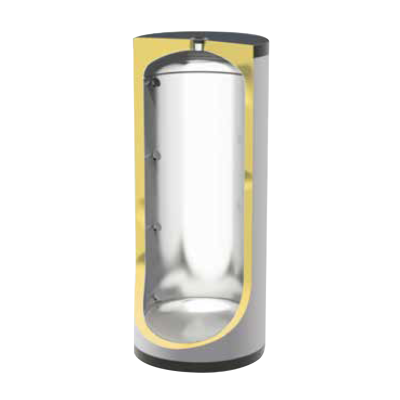
Boiler Buffer Tanks are engineered to regulate temperature, water volume, and flow within heating, cooling, and domestic hot water systems. Functioning as a thermal “battery,” they store heated or chilled water, releasing it as needed to accommodate fluctuations in system demand and prevent frequent cycling of boilers, pumps, or other heating and cooling equipment.
By stabilizing system operation, buffer tanks enhance overall energy efficiency, reduce mechanical stress and wear on critical components, and extend equipment lifespan. At the same time, they help maintain consistent temperatures, ensuring reliable performance and improved comfort in both residential and commercial applications.
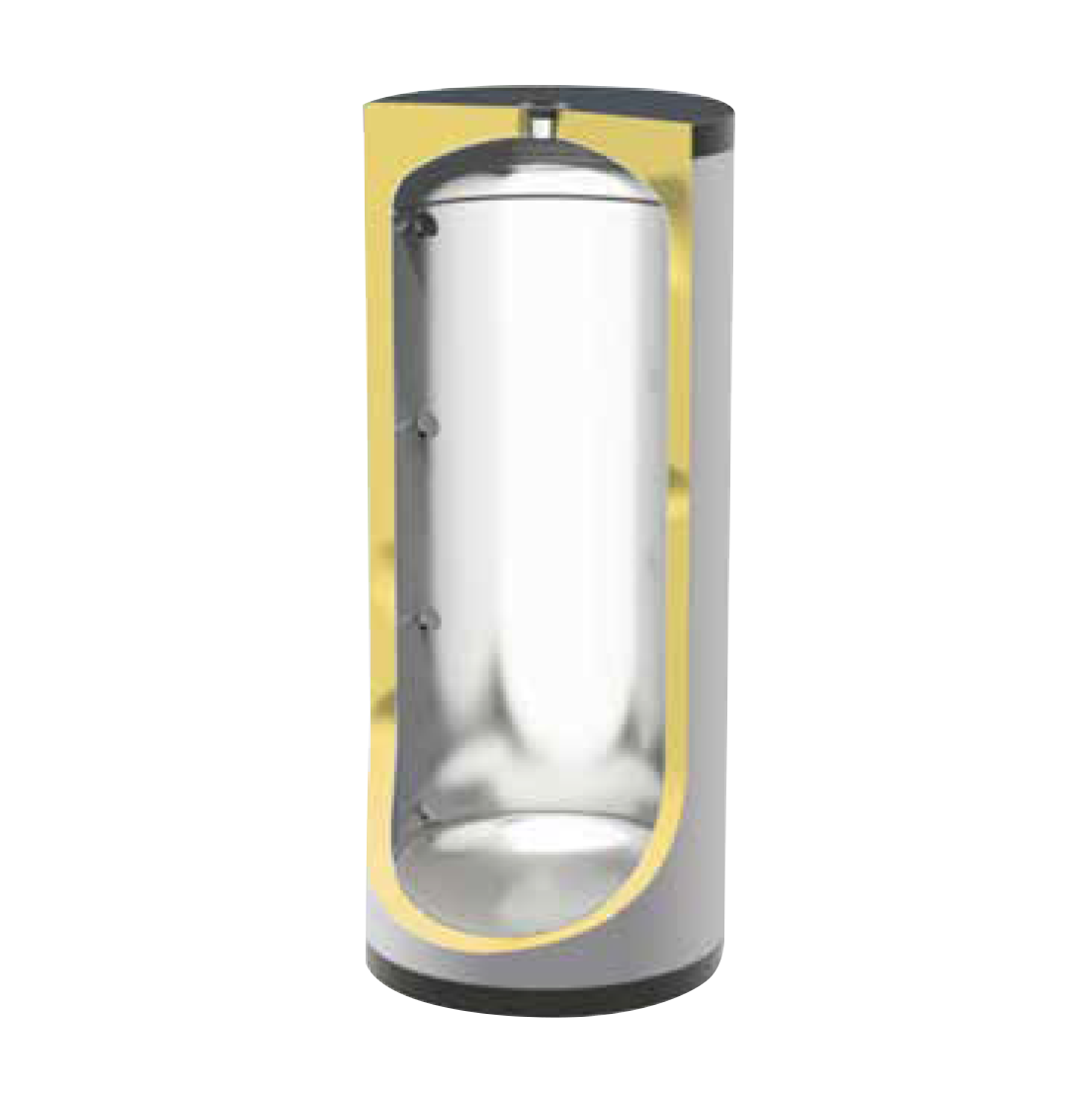
| Capacity (L) | 80 100 120 150 200 250 300 400 500 600 700 800 1000 |
| Inner tank material | SUS304 / SUS316L / Duplex Steel 2205 |
| Outer tank material | Galvanized steel with painting SUS201 / SUS304 / SUS316L |
| Insulation thickness (mm) | 50 standard, optional 45/55/60/80/100 |
| Connection size (inch) | 1/2″ 3/4″ 1″ 5/4″ 6/4″ 2″ |
| Electric heater | 1″- 6/4″ 1.5-3Kw 110-240V 50-60Hz |
| Installation | Vertical / Horizontal / Hanging |
Our stainless steel buffer tanks add thermal mass to heat pumps, boilers, solar heating systems, and other hydronic heating applications. They help reduce short cycling, stabilize system flow temperatures, and support more consistent equipment operation.
Available in capacities from 80 to 1000 liters, our buffer tanks can be configured with different stainless steel grades, insulation thicknesses, connection layouts, and installation options to suit residential and light commercial heating systems.
Learn more about how buffer tanks work. →
Buffer tank sizing should be based on the heat source output, minimum operating time, system water volume, temperature differential, and hydraulic layout. The heat pump or boiler manufacturer's minimum system volume requirements should also be considered.
The following capacities can be used as a preliminary reference for project discussions:
| Heat Source Output | Preliminary Capacity Range* | Typical Application |
|---|---|---|
| 4–6 kW | 80–150 L
|
Small residential heating systems |
| 8–12 kW | 150–300 L
|
Family homes |
| 14–20 kW | 300–500 L
|
Large homes or small commercial systems |
| 25 kW and above | 500–1000 L
|
Multi-zone or commercial systems |
*Reference only. Final sizing depends on the heat source manufacturer's requirements, minimum run time, system water volume, temperature differential, and hydraulic configuration.
For a more accurate recommendation, send us your heat source type and output, system pressure, heating application, preferred capacity, and quantity. Our team can review the project requirements and recommend a suitable tank configuration.
Different heating systems may require different material specifications depending on water quality, operating conditions, and installation environment.
SUS304 is a standard stainless steel option for many closed-loop hydronic heating systems and offers a practical balance of corrosion resistance, durability, and cost.
SUS316L provides greater resistance to chloride-containing or more aggressive water conditions and can be selected when the application requires additional corrosion resistance.
Duplex 2205 combines high strength with strong corrosion resistance and can be considered for demanding applications where higher mechanical and corrosion performance is required.
The outer shell can be supplied in painted galvanized steel, SUS201, SUS304, or SUS316L, depending on project requirements.
Our buffer tanks are available in different installation configurations to accommodate various mechanical-room layouts.
Vertical floor-standing tanks are commonly used where sufficient installation height is available and can support effective thermal stratification.
Horizontal tanks are suitable for mechanical rooms and utility spaces where vertical clearance is limited.
Wall-hanging configurations are available for selected smaller capacities where floor space is restricted.
The tank should be installed according to the system design, with suitable supports, piping, pressure relief protection, and expansion provisions in accordance with applicable local requirements.
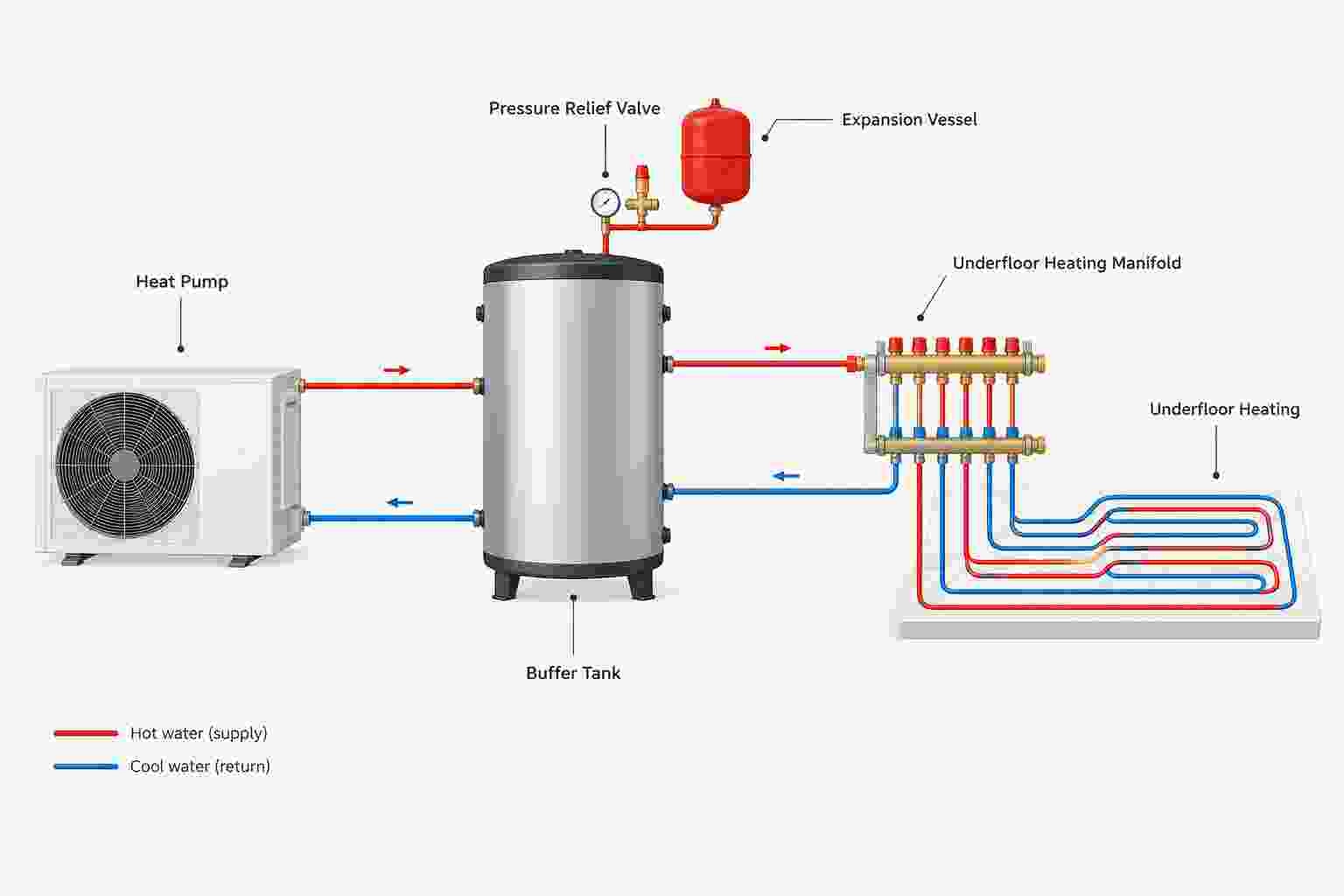
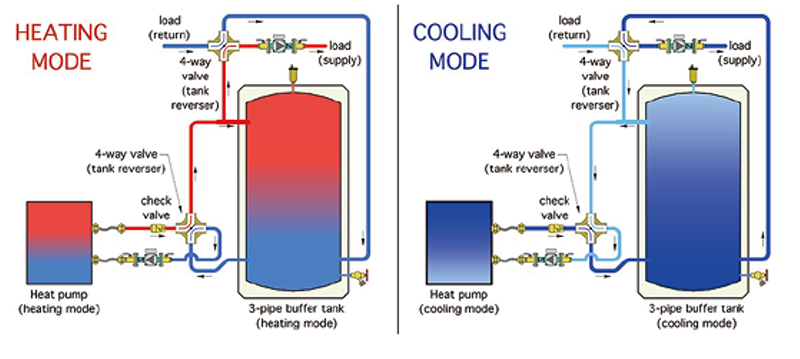
Our buffer tanks can be integrated into a wide range of hydronic heating systems. Depending on the hydraulic design, they provide additional water volume and thermal storage while helping coordinate heat-source output with heating-zone demand.
Buffer tanks are commonly used with air-to-water and ground-source heat pumps when the system requires additional water volume or thermal mass. They can also support more stable operation in systems with multiple heating zones or changing heating demand.
Underfloor heating typically operates at relatively low water temperatures and may include multiple heating circuits. A properly sized buffer tank can provide additional thermal storage and help maintain stable flow conditions as heating demand changes.
Buffer tanks can be connected to gas, oil, or other hydronic boilers to store thermal energy and better coordinate heat generation with distribution-side demand. They can also be incorporated into hybrid systems combining a heat pump with a boiler or electric backup heater.
The tank can also be integrated with solar thermal systems and other multi-source heating configurations. When several heat sources are used together, the buffer tank can help manage differences in heat production and heating demand, subject to the overall hydraulic design.
Typical system connections include:
Not every heat pump system requires a buffer tank. The need depends on factors such as the heat pump's minimum water volume requirement, minimum output, system water volume, number of heating zones, and hydraulic configuration.
Systems with multiple zones or insufficient system water volume may benefit from additional thermal storage. Always check the heat pump manufacturer's installation requirements before selecting a buffer tank.
Glycol-water mixtures may be used in suitable heating applications, subject to the tank material, seals, operating temperature, and system design.
When requesting a quotation, provide the glycol type and concentration so the compatibility requirements can be reviewed for your application.
The maximum working temperature depends on the specific tank design and manufacturer specification. Please contact us for the confirmed maximum operating temperature of the required model.
Yes. Buffer tanks can be supplied with ports for electric heating elements. Available heater port sizes include 1″ to 6/4″, with heater power and voltage selected according to the specific project requirements.
Please provide your required voltage, power, frequency, and heater specification when requesting a customized configuration.
Regular inspection should include the insulation, pipe connections, pressure relief components, and visible signs of leakage or corrosion. Inspection frequency should also consider system water quality, operating conditions, and local regulations.
For most heating systems, an annual inspection is a practical starting point unless the system manufacturer or local regulations specify a different schedule.